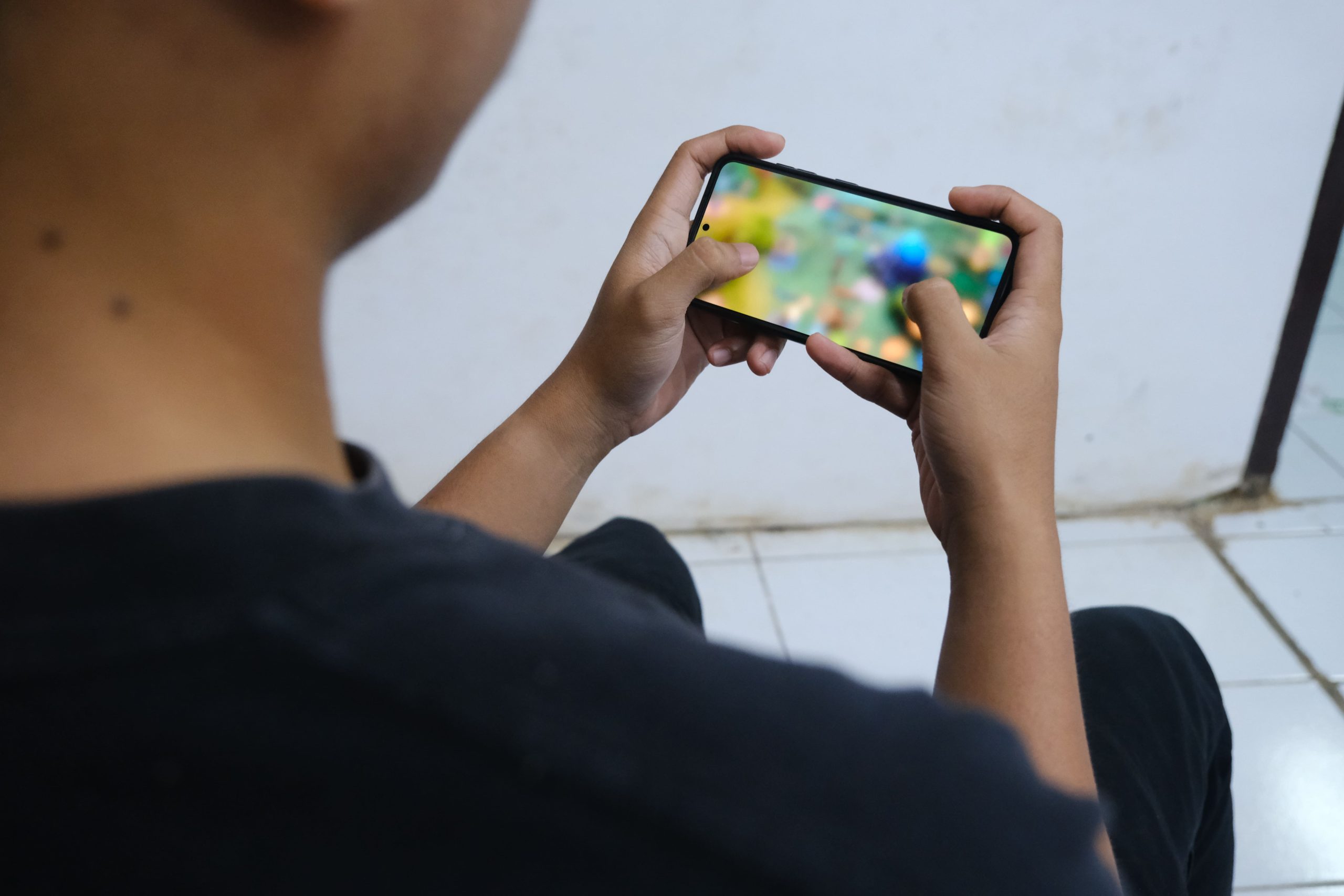
The esports industry in Indonesia continues to grow drastically with the appearance of tournaments offering large prizes and professional status recognition for players. However, behind the glamour of competition and the increase in popularity, the health aspects of esports athletes are often overlooked.
This phenomenon has become a serious concern for Andre Frinanda Sa’Bantoro and his team, alumni of the Physiotherapy Department, Faculty of Nursing, Hasanuddin University (Unhas) batch 2019, who uncovered interesting findings regarding the relationship between forward head posture (FHP) and upper trapezius muscle spasms in esports athletes. The inspiration for this research came from Andre’s passion for mobile games such as PUBG and Mobile Legends.
This research highlights the habits of esports athletes who spend hours in the same relatively fixed position, namely looking down at their smartphone screens. This activity has the potential to cause a postural disorder known as FHP, a condition where the head tends to lean forward from its normal position. Medically, this condition is described as a decrease in the lordosis curve of the neck, and the long-term effects can trigger various health problems.
Utilizing a cross-sectional design and a purposive sampling method, this study included 41 esports athletes aged 17–24 years in Makassar City. The main measurement involved the use of a goniometer to determine the craniovertebral angle (CVA), which indicates the severity of FHP experienced.
The athletes had a relatively high level of training intensity, ranging from 5 to 10 hours daily and 5 to 7 times weekly. Their training routines varied, with some training in the morning and afternoon, while others trained after school or work, usually starting around 4 p.m. and continuing until midnight. Training intensity also tended to increase as championships approached.
In the study, FHP was classified into three levels: normal (>50 degrees), mild (≤50 degrees), and severe (≤30 degrees). The study found that all participants experienced FHP in the mild category, with an average angle of 41.59 degrees. Meanwhile, for upper trapezius muscle spasms, 41.5% of athletes experienced moderate spasms and 19.5% experienced severe spasms.
However, this study found no significant relationship between FHP and upper trapezius muscle spasms. Andre suggested several possible reasons behind this finding, one of which was that the athletes exhibited only mild FHP.
Although they are called “athletes,” Andre explained that most participants are still considered semi-professionals because the esports industry in Makassar has not yet fully developed in 2023.
“Playing games is just a hobby, and they may have other jobs on the side. So, they don’t focus on playing games only,” he said on Friday (11/04).
Nevertheless, the study found that 41.5% of respondents (17 people) experienced moderate muscle spasms in the upper trapezius muscles, and eight people experienced severe spasms. This shows that muscle issues continue even though they are not directly linked to FHP.
The researcher also explains the concept of upper cross syndrome, which is a musculoskeletal disorder caused by muscle imbalance around the neck, shoulders, and chest. FHP is one manifestation of this syndrome that occurs when the muscles at the back of the neck work harder as the head tilts downward, while the muscles at the front weaken.
Additionally, this study demonstrates differences between smartphone and PC usage in the context of FHP. Smartphones with smaller screens, usually placed below near the lap, require users to tilt their heads downward, while PCs with larger screens can be positioned at eye level, thereby reducing the risk of downward posture.
“The good thing is that when we play games, our position is not consistent, so we don’t stay still while playing. We have to keep moving, and after a maximum of half an hour, we have to move again,” he emphasized.
In the study, Andre also recommended regular neck muscle stretching, neck muscle strengthening, and regular physical activity to avoid a sedentary lifestyle.
This study highlights the importance of body posture awareness among esports athletes. Although there is no direct correlation between FHP and muscle spasms, health risks still exist and need to be treated seriously.
With the development of the esports industry in Indonesia, research of this kind is becoming increasingly important to protect athletes’ health, which is often ignored amid the glamour of their achievements and popularity. The findings of this study may serve as an early warning for esports athletes and gamers in general to pay greater attention to their physical well-being when playing for extended periods.
Read the original text in Bahasa.
Original writer: Azzahra Dzahabiyyah Asyila Rahma
Translated by: Nurul Fathiyah Salsabila A.