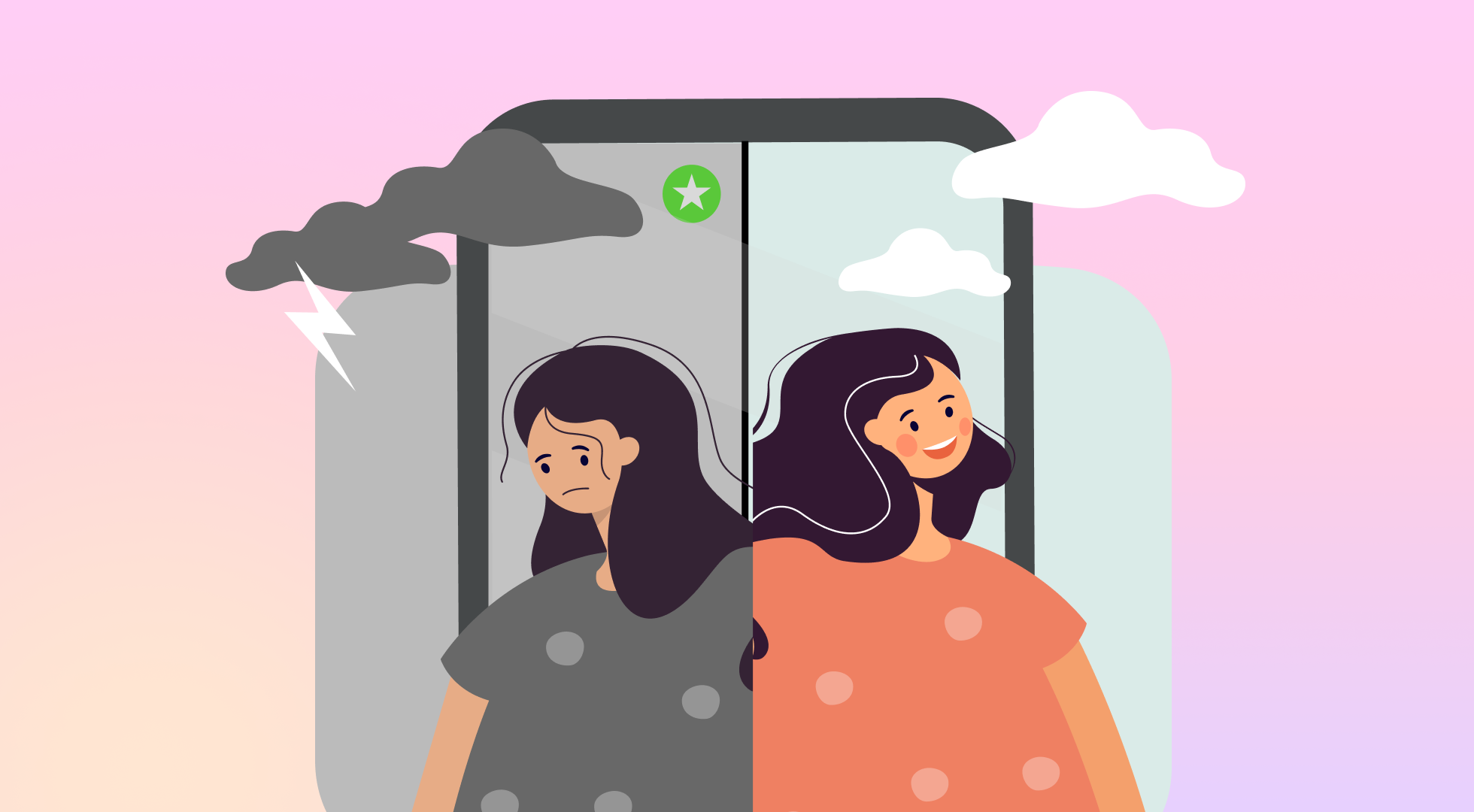
In today’s digital era, social media platforms such as Instagram are not only spaces for sharing personal moments but also platforms for teenagers to express themselves to the world. But what happens when one account is no longer enough? Among Gen Z, the use of both primary and secondary accounts is no longer a novelty; it has evolved into a strategy to cope with increasingly complex social pressures.
A Second account is an alternative account, typically followed by a close circle of friends. Within this space, teenagers feel freer to express themselves, away from the pressures of maintaining the ideal image they construct on their main account.
Research by Hasanuddin University (Unhas) Sociology Master’s student, Muhammad Al-khahfi Akhmad, and his team highlighted this phenomenon through a study entitled “Unveiling the Mask of Duality: Exploring Teenagers’ Digital Identity on Social Media.”
Applying a mixed-method approach that combined quantitative and qualitative data, this study involved 252 respondents aged 19 to 22 years old, five of whom were active users of Instagram. The results revealed that this duality of digital identity reflects two primary needs of young people: maintaining an idealized public image and expressing themselves more authentically.
Main accounts are typically used to post curated content that aligns with social norms. This is because young people feel compelled to maintain a positive image as their audience often includes family, lecturers, and even prospective colleagues. The pressure to appear good, successful, and ‘perfect’ positions the main account as a kind of front stage, echoing Goffman’s Impression Management Theory.
In contrast to the main account, the second account functions as a backstage area. It is a place for freer expression with little concern for social judgment. This is where teenagers can post unfiltered photos, personal confessions, jokes, and spontaneous comments without fear of being negatively labelled.
“On their second accounts, they feel freer, as they can control who follows them and need not be concerned about maintaining an image. The people who view these accounts are generally those who already understand their true selves,” explained Khahfi on Wednesday (14/05).
Quantitative findings in the same study reinforce this. Of the 252 respondents, the majority showed a significant increase in self-expression, self-disclosure, and self-promotion on their second accounts. This is in line with the theory of the need for authenticity, which states that individuals tend to be happier when they can be their true selves.
The main motivation for teenagers to have two accounts is to balance two often conflicting needs: being socially accepted and being honest with themselves. On their main account, they have to be careful and think twice before posting anything, whereas on their second account, they are more spontaneous and feel that they don’t have to please everyone.
“This duality is not a matter of multiple personalities, but rather a strategy for dealing with multiple audiences. On their main account, they maintain their image, while on their second account, they show their true selves to a select group of people,” said Khahfi.
Some informants even referred to their second accounts as the most ‘real’ place on social media, because that is where they could be their ‘unfiltered’ selves.
Although it appears to be a healthy strategy, digital identity duality also carries potential risks. Other studies have shown that managing two or more digital personas can lead to emotional exhaustion and identity confusion. However, this study found that many teenagers feel more mentally relieved because they have a safe space to express their feelings.
“A second account can be a double-edged sword. If the content is leaked, it can trigger conflict, but if it is kept private, it can actually strengthen connections and trust in friendships,” he said.
At the same time, this phenomenon also reveals that digital identity is now very fluid. Anyone can easily create different digital personas. This opens up opportunities for misuse, such as impersonation or even identity fraud.
In the digital world, identity is no longer about who we are but how we appear to others. Primary accounts are often used to build personal branding, while secondary accounts are more often used as a place to experiment and develop one’s identity.
This phenomenon cannot be separated from the context of social inequality. Factors such as class, gender, and access to technology can influence young people’s ability and freedom to form a complete digital identity.
Instead of prohibiting or passing judgment, parents and educators should seek to understand the context behind this trend. Second accounts are not merely spaces for “mischief” but rather arenas for adolescent growth and self-development. Providing empathetic, critical, and open digital literacy education is essential to help them engage with the virtual world healthily and responsibly.
The phenomenon of digital identity duality is not just a current trend. It is a reflection of how today’s teenagers navigate social demands, pressure to appear perfect, and the need to feel accepted. Amidst the noise of the virtual world, they try to create their own safe space, a place where they can be their whole selves, without having to be perfect and without always having to be strong.
Read the original text in Bahasa.
Writer: Athaya Najibah Alatas
Translator: Afifah Khaiarunnisa